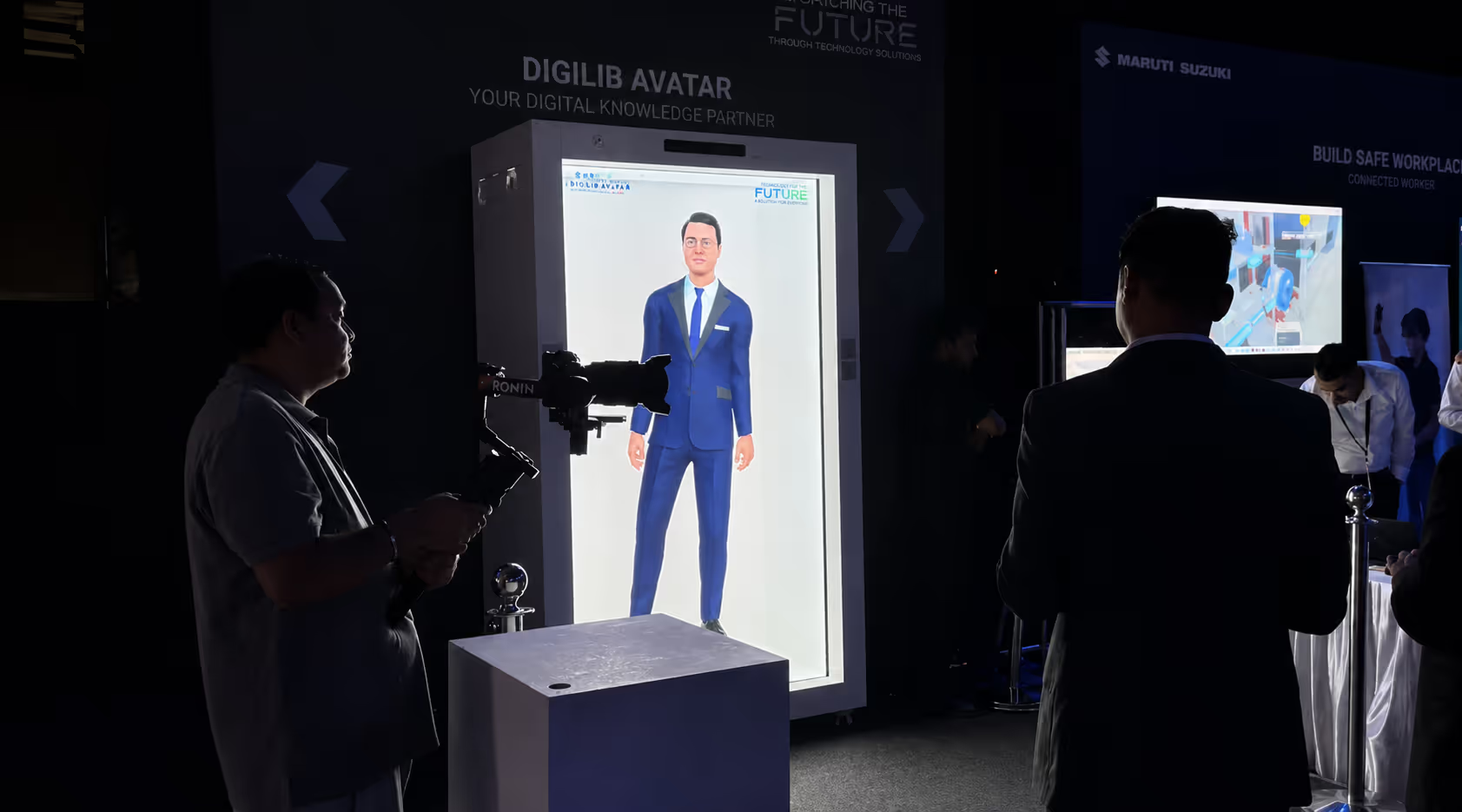
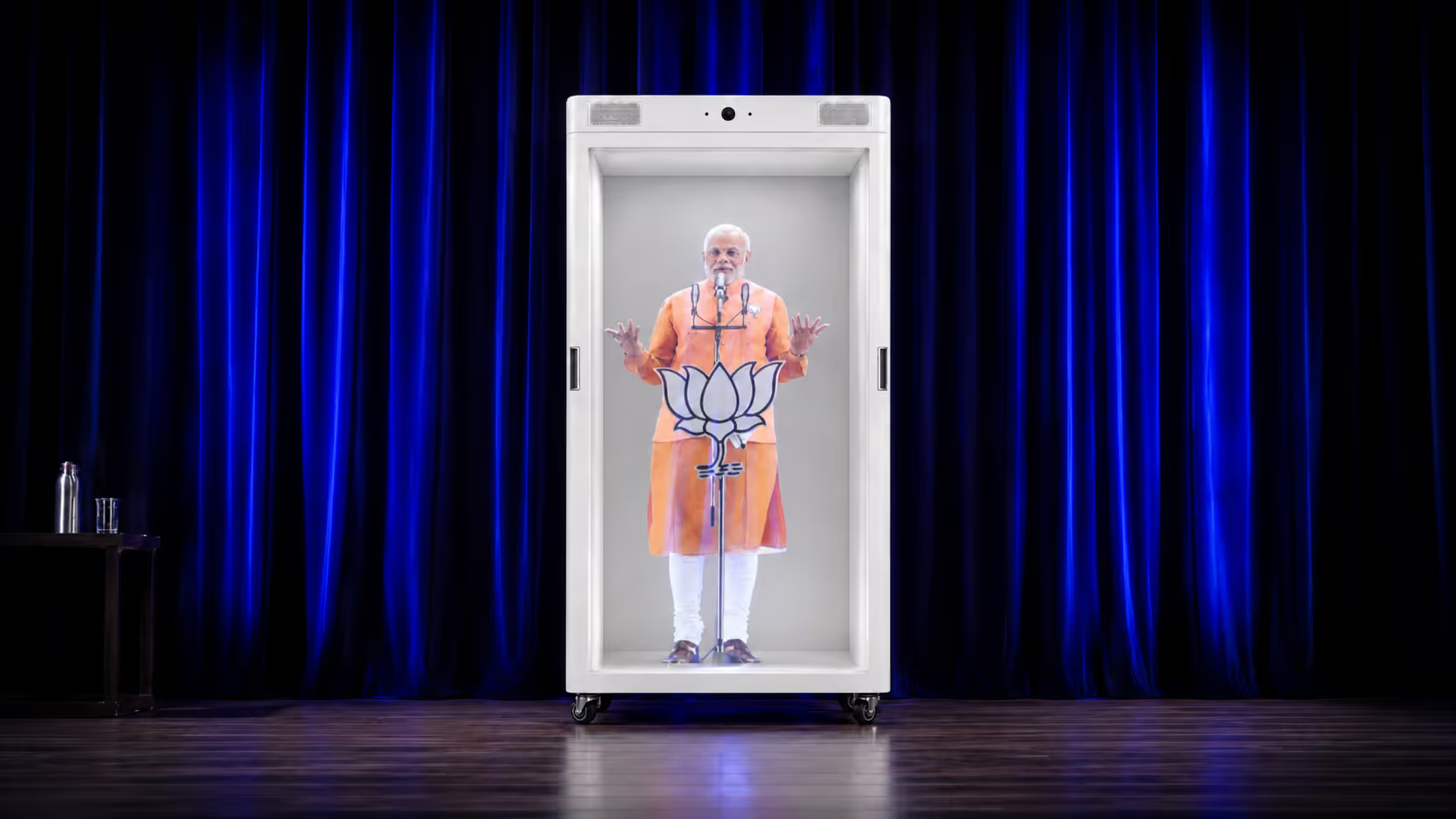
From large-scale 3D projections in the 2014 elections to plug-and-play HoloBox units at WAVES 2025 — how life-sized, interactive holographic presence became enterprise-ready event infrastructure in India. Here's how it works, and what it returns.
Live events in India have always been defined by scale. In a country of over a billion people, reaching an audience meaningfully demands far more than a microphone and a strong script — it demands a presence that transcends distance. For years, event organisers and corporate leaders leaned on flat LED walls and punishing travel schedules to connect with audiences across cities. The logistical reality of being in several places at once, or delivering a genuinely intimate message to a hall of thousands, remained the hard limit. The industry needed a medium that could project a lifelike presence across distance — the gap that hologram technology for events in India would eventually close.
That leap arrived publicly during the 2014 general elections. To reach voters across remote constituencies and multiple cities at once, large-scale 3D holographic projections were deployed so a single speaker could appear simultaneously across dozens of locations nationwide. It was not a gimmick; it was a strategic communication tool that reset expectations for mass reach in India. The 2014 campaign proved that hologram technology for events in India was not only viable at scale, but unusually powerful at capturing and holding attention.
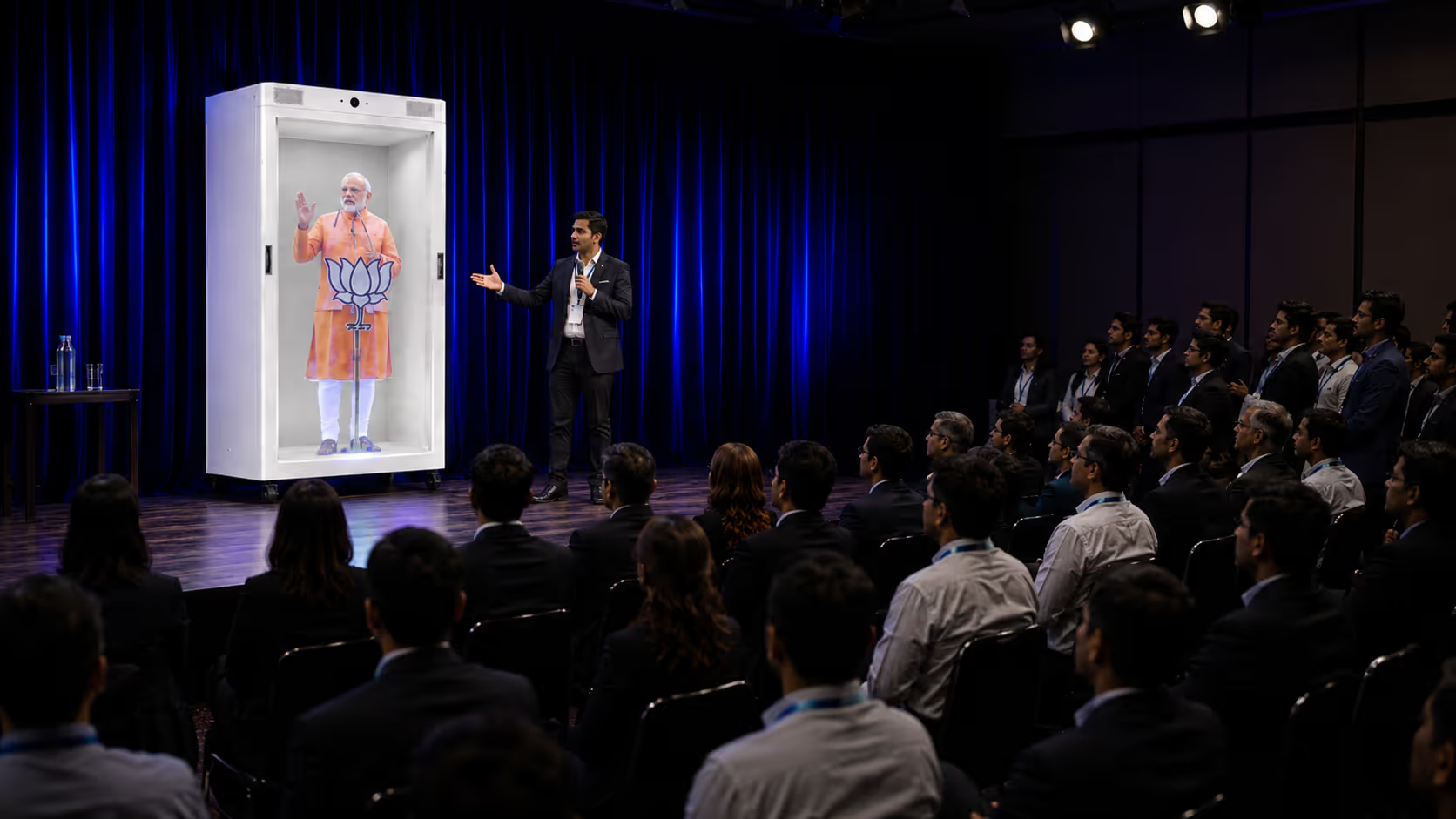
A decade on, the technology has moved decisively from the political stage into the corporate mainstream. The energy around the inaugural WAVES summit — held at the Jio World Convention Centre in Mumbai from 1 to 4 May 2025, drawing delegates from over 90 countries — reflected exactly this shift: India positioning itself as a global hub for media, entertainment and immersive technology. The change is not just cultural but technical. Instead of the complex, stage-sized "Pepper's Ghost" rigs of 2014, modern events now deploy sleek, standalone holographic units like HoloBox — a self-contained enclosure that renders a life-sized, photorealistic hologram with a fraction of the setup, higher visual fidelity, and genuine two-way interaction. That journey, from resource-heavy campaign stages to a plug-and-play unit you can wheel into a lobby, is what makes holographic display a high-ROI tool for serious corporate and public communication today.
The technical story behind hologram technology for events in India is a shift from theatrical illusion to deployable infrastructure. The 2014 approach was, in essence, a scaled-up version of the 19th-century "Pepper's Ghost" illusion: a projector beamed a feed onto a hidden reflective surface, which bounced onto a tensioned transparent foil stretched across the stage at a precise 45-degree angle. The visual impact was undeniable, but the requirements were immense — near-total lighting control, heavy truss structures, and several days of calibration. It suited only the largest, best-funded mega-events.
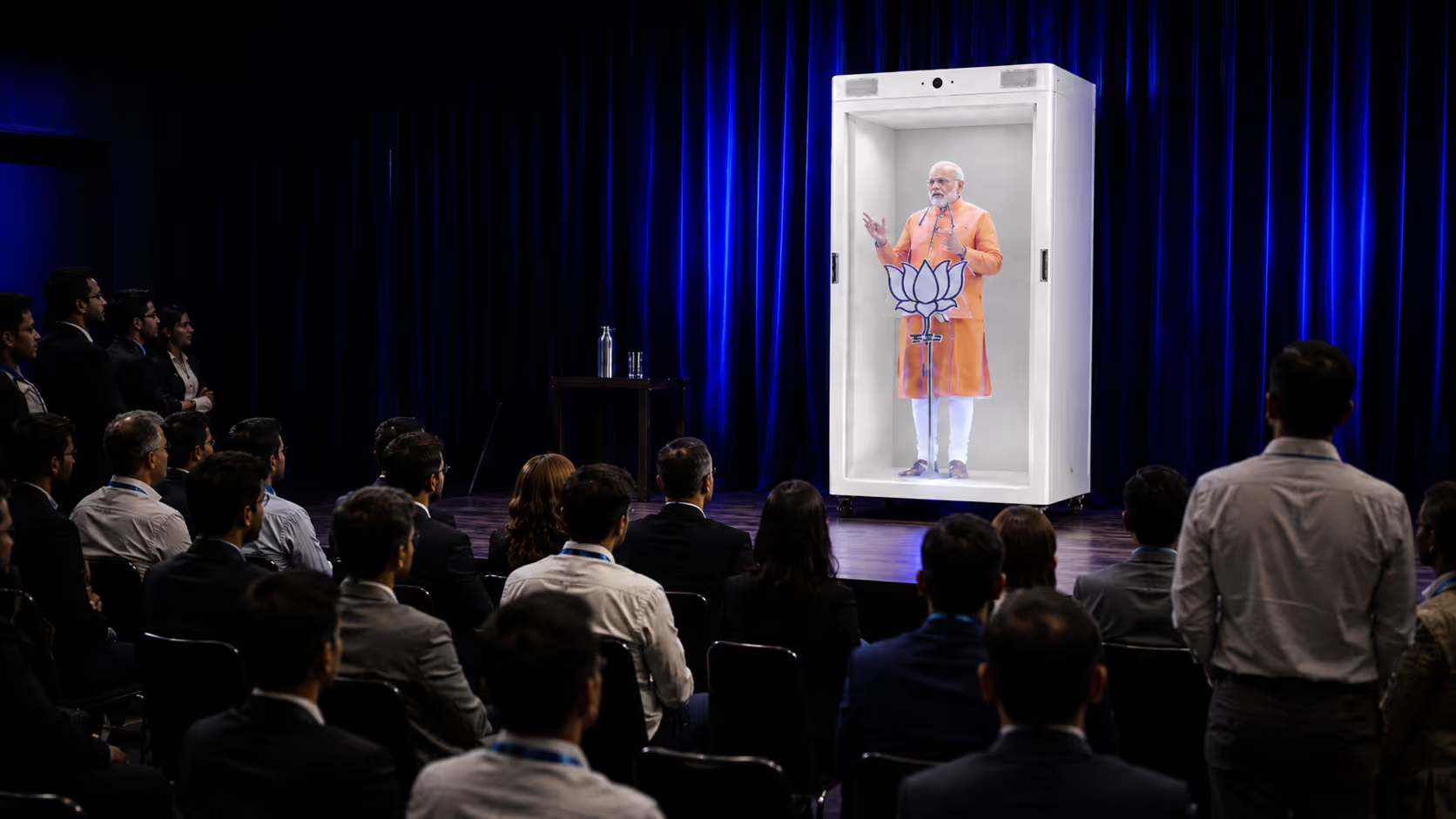
The model has now shifted to standalone units. A HoloBox needs no fragile foil or blacked-out hall. It is a sealed optical enclosure — an 86" display at 4K resolution — that produces the illusion of a real person standing inside the box. The subject is recorded once in a studio using professional lighting and a clean green-screen backdrop, or streamed live; the feed is then played back or beamed into the unit, where it renders as a life-sized, photorealistic hologram. Set-up is effectively plug-and-play: standard 110–240V power, an Ethernet or Wi-Fi connection (4G-ready), and media loaded by USB, SD card, or media server.
What turns HoloBox from a visual novelty into a business tool is scalability and interactivity. A keynote recorded in Mumbai can be deployed across multiple HoloBox units in Delhi, Hyderabad, and Bengaluru simultaneously. Beyond pre-recorded playback, HoloBox supports a touch-based interactive mode — visitors tap the 22" overlay to trigger pre-recorded answers, creating a guided "conversation" — a look-alike AI avatar built from a LiDAR scan and lip-synced to recorded audio, and real-time live-streaming up to 2K using chroma-key capture, so a leader anywhere in the world can appear, live, as a hologram on the floor. This is what bridges the gap between speaker and audience in a way flat-screen video conferencing simply cannot match.
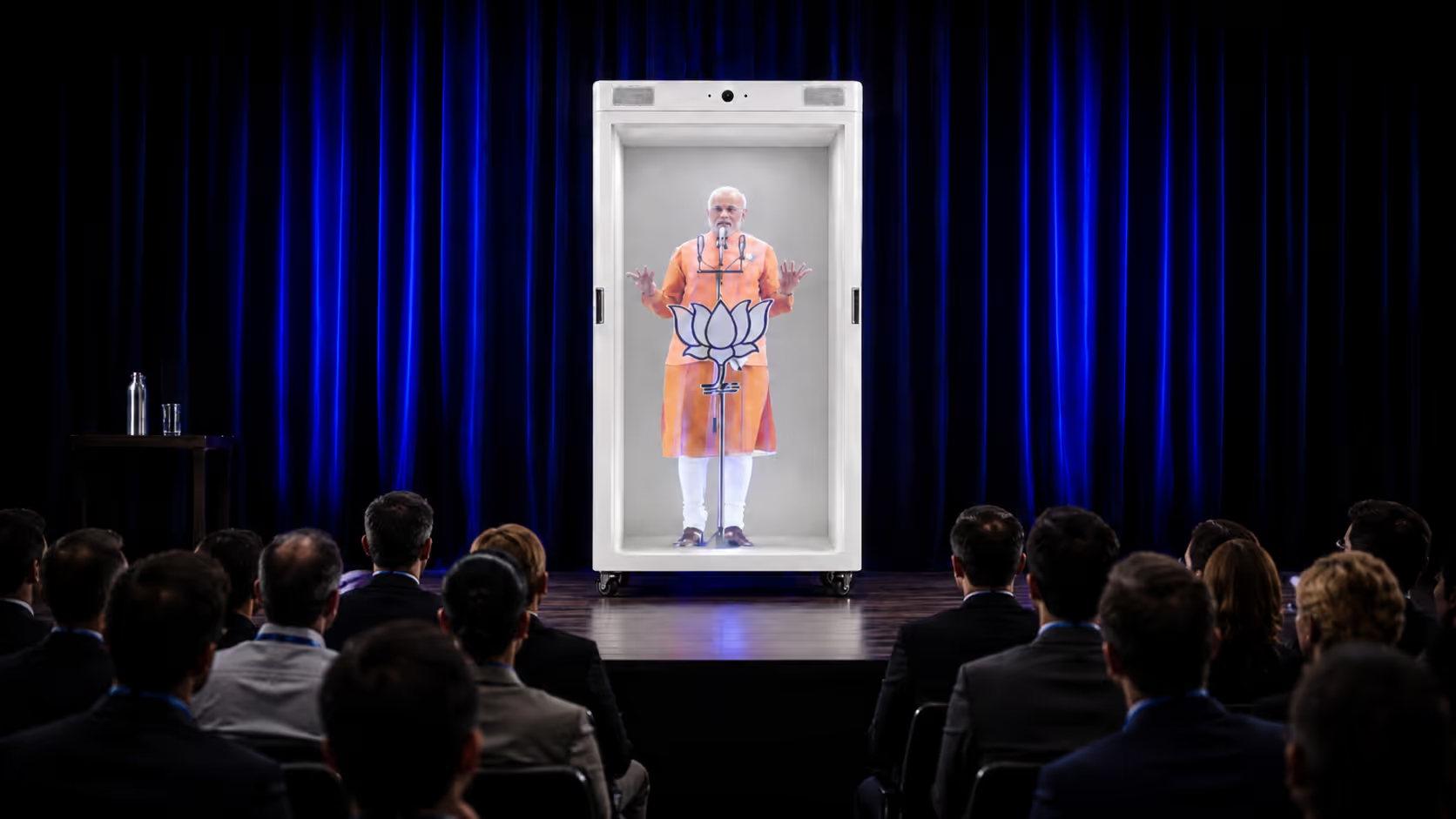
The subject is captured once in a studio on a clean green-screen — or streamed live via chroma-key — producing a broadcast-clean feed ready to render as a life-sized hologram.
The 86" 4K sealed enclosure renders the feed as a photorealistic figure that appears to stand inside the glass — crisp, bright, and readable across a busy venue floor.
A 22" touch overlay lets visitors trigger answers, an AI avatar can lip-sync responses, and live two-way streaming up to 2K lets a remote leader see, hear, and reply in real time.
One Mumbai keynote deploys to HoloBox units in Delhi, Hyderabad and Bengaluru at once — consistent messaging, no flights, no multi-city stage builds.
The shift to standalone units is a major reduction in on-site complexity. The week-long builds and fragile stage rigs are gone; a HoloBox is wheeled in, plugged into standard power and network, and running within hours. That lowers venue-day rental, specialised labour, and execution risk — and, crucially, lets teams deliver a high-end holographic experience in smaller, non-traditional spaces such as corporate lobbies and regional banquet halls that could never host the older infrastructure.
C-suite presence is constrained by travel. Holographic beaming solves it: a CEO or brand spokesperson can hold an authoritative, "in-person" presence across multiple cities in a single day without boarding a flight. Messaging stays consistent across regions, valuable executive time is preserved, and the sheer novelty of the format reliably earns media coverage.
In an era of screen fatigue, a life-sized, glowing, interactive hologram commands a room instantly. It creates a memorable, highly shareable "wow" moment that attendees photograph and post — organically extending reach beyond the venue. And because HoloBox can capture which questions visitors tap most, marketing gains real qualitative signal on audience interest that passive video never provides.
Deployed well, holographic display is not showmanship for its own sake — it produces measurable outcomes that justify the investment. Indicative benchmarks for enterprise-grade holographic event deployments include:
Cloud-based beaming of one speaker to multiple HoloBox units across cities lifts total live reach dramatically — without the proportional cost of multi-city stage builds and executive travel.
Sessions featuring a live holographic speaker consistently out-score standard 2D video presentations on attendee engagement and information recall in post-event surveys.
Replacing multi-city travel for town halls and launches with remote beaming delivers immediate bottom-line savings across an event series.
Holographic activations act as an organic PR catalyst, generating significantly more coverage and attendee-driven impressions than standard-format events.
The evolution from the campaign stages of 2014 to the standalone units seen around WAVES proves that hologram technology for events in India has matured into a scalable, enterprise-ready communication platform. It is no longer a fragile novelty reserved for the largest budgets — it is accessible infrastructure for the future of live events, corporate communications, and brand experience.
As audience expectations for tech-forward, immersive experiences keep rising, the brands that invest early in interactive holographic displays will hold a real, durable advantage. By turning passive attendees into active participants, event professionals can extend reach, deepen engagement, and create interactions that translate directly into ROI, satisfaction, and long-term brand equity.