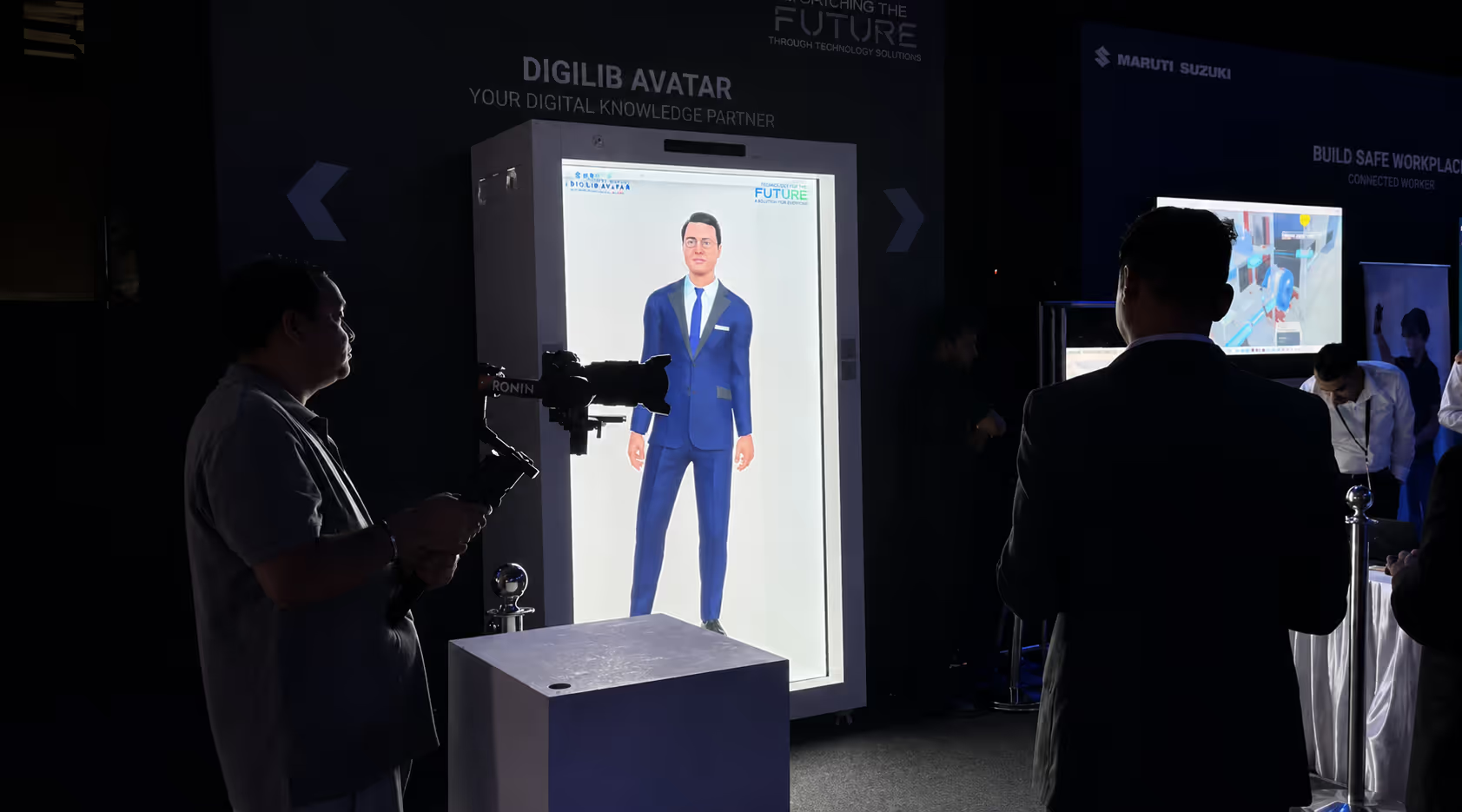
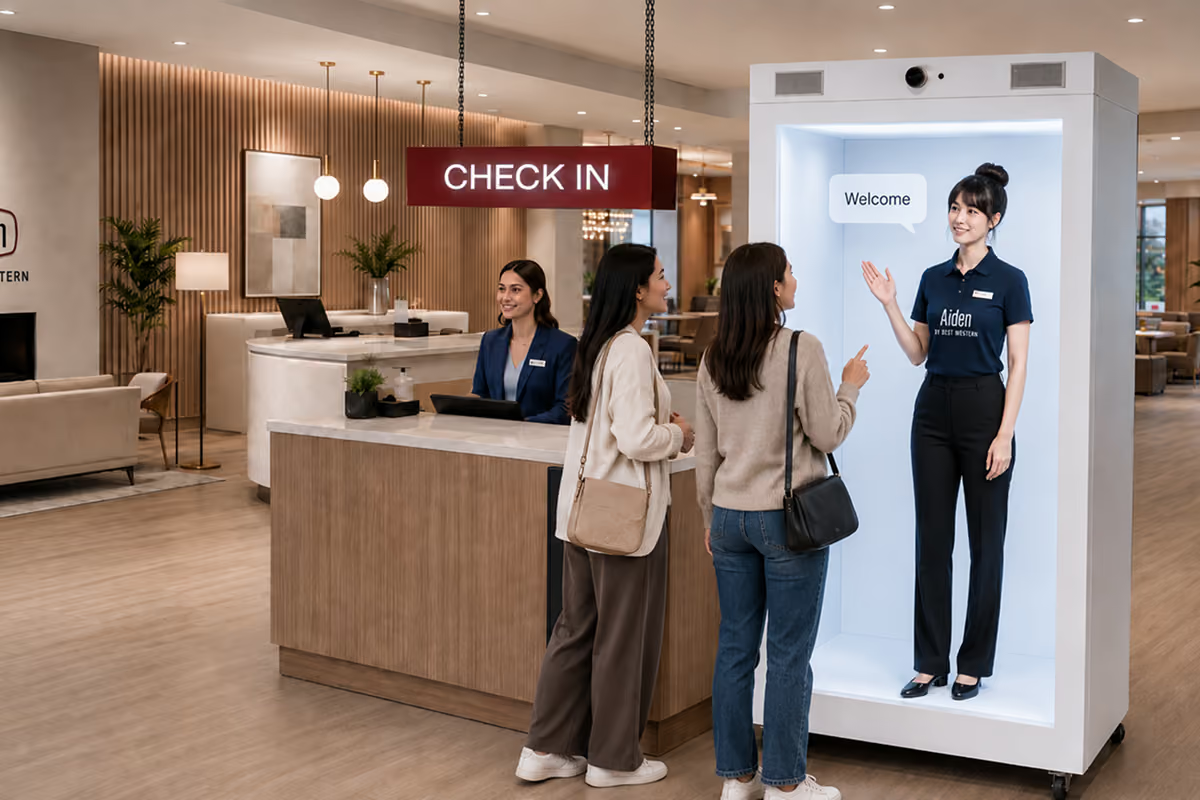
How CIC Hospitality turned the hotel front desk into a life-size AI hologram — letting guests check in, collect room keys, and book dinner by simply talking to a holographic receptionist inside a HoloBox.
Hotel check-in has been ready for reinvention for a long time. For decades the lobby's core job was a single transactional moment — queue, paperwork, key — often delivered to a tired guest at the end of a long journey, by a front-desk team stretched across early starts, late nights and unpredictable arrival peaks. The modern traveller now expects something closer to the convenience of their phone and the warmth of a concierge, all at once. Hotel owners and operations directors, meanwhile, face relentless pressure to control labour costs, keep service consistent across a growing portfolio, and create arrival moments memorable enough to justify premium rates. What the industry needed was not another self-service kiosk, but a medium that could make automation feel human.
That leap arrived publicly, and at the front desk, with CIC Hospitality. The Nordic operator — which runs a portfolio of Aiden by Best Western hotels and is part of the wider BWH Hotels group — launched an AI-powered holographic receptionist at the Aiden by Best Western Lolland in Denmark, going live on 21 November. Working with holographic display maker Holoconnects, AI avatar platform RAVATAR, and cloud hospitality system Mews, CIC built a life-size, 4K holographic greeter that guests could simply talk to. The avatar checks guests in and out, generates room keys, books additional rooms, arranges dinner and spa reservations, and answers everyday questions — all through natural, real-time conversation. This was no flashy one-off for a press headline; it was a working operational tool, and CIC became the first hotel operator to put the HoloBox to work at the reception desk.
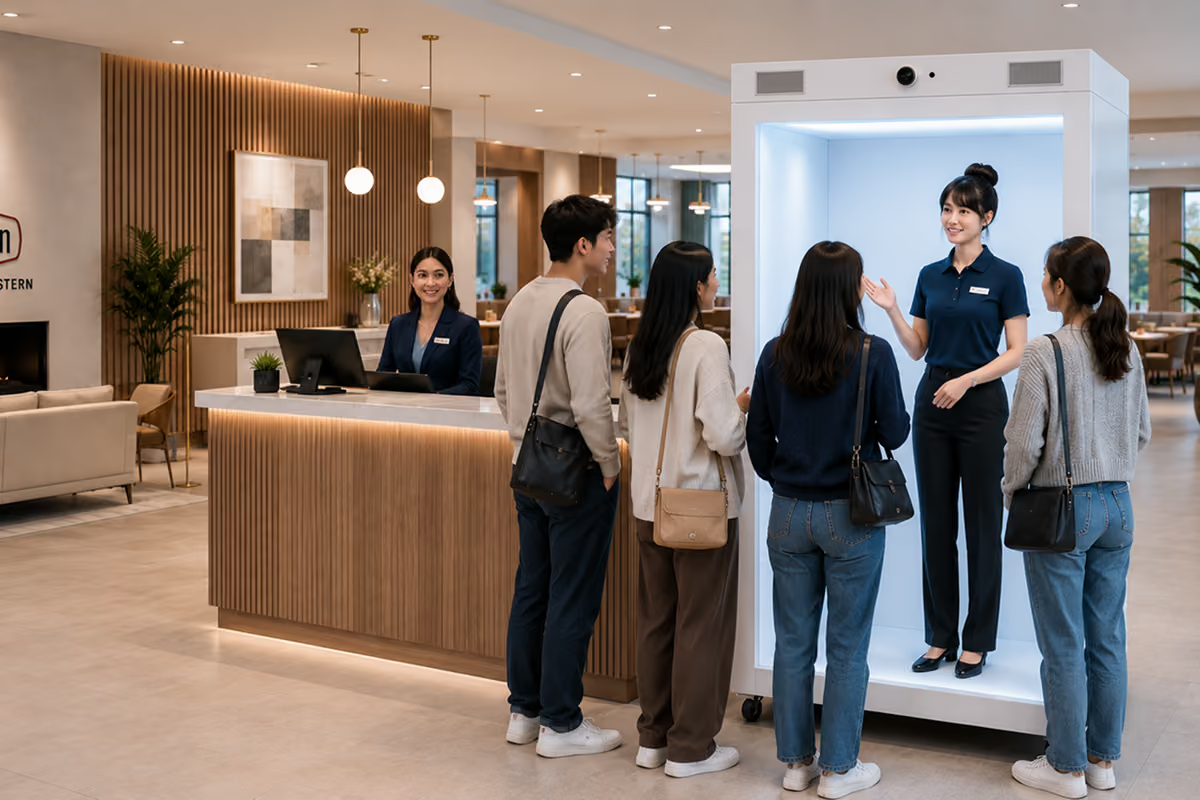
Since that launch, the model has only sharpened. The hologram lives inside a Holoconnects HoloBox — a sleek, standalone, transparent enclosure that delivers a life-size 3D image without the fragile stagecraft of older "hologram" illusions. When the AI avatar reaches the edge of what it can answer, the guest is not left stranded: they can connect live to a real CIC Hospitality employee, based remotely in Oslo, who appears instantly as a life-size hologram in the same box. That blend — an AI digital human for the routine, a real human hologram for the exceptional — is exactly what makes hologram hotel check-in a credible operational strategy rather than a novelty, and it is the template forward-thinking hospitality groups in India and worldwide are now studying closely.
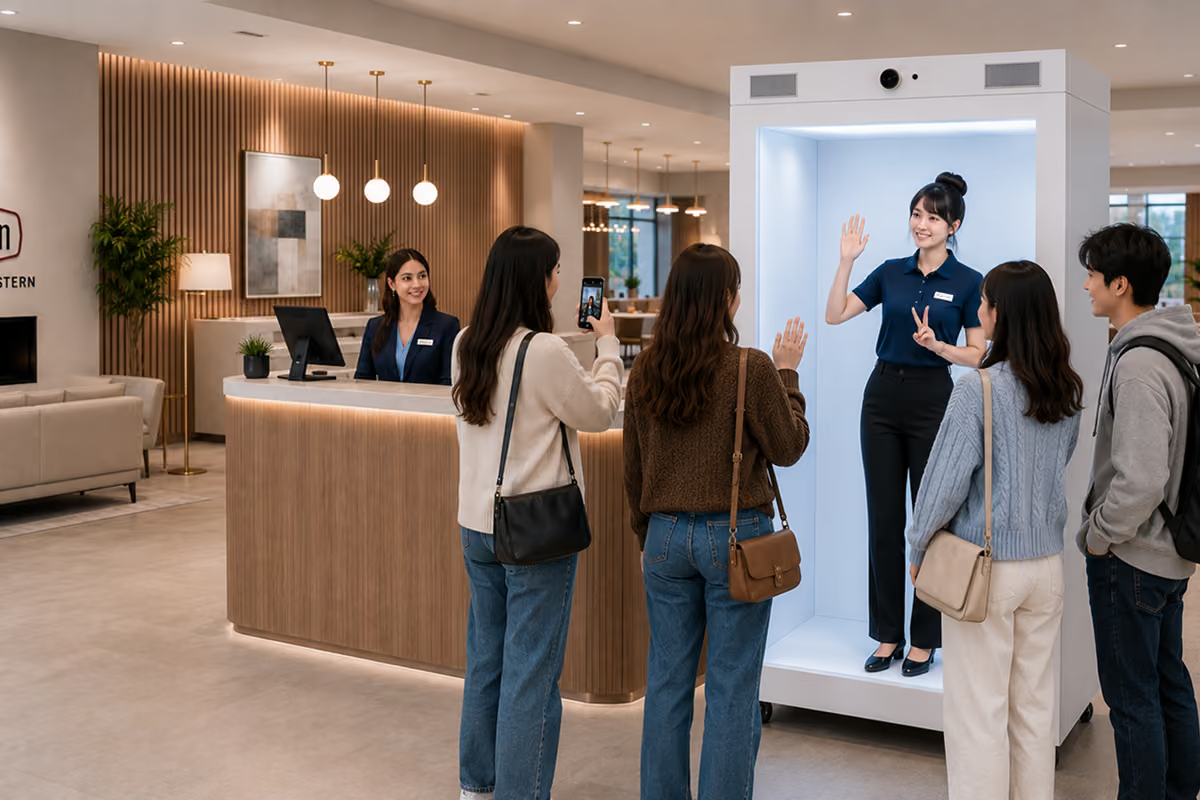
Hologram hotel check-in has moved from theatrical illusion to dependable digital infrastructure, and the Aiden deployment shows the modern approach clearly. Older corporate "holograms" leaned on a scaled-up version of the 19th-century Pepper's Ghost trick: a projector beamed a feed onto a hidden reflective surface, which bounced the image onto a tensioned transparent foil set at a precise angle. The visual effect was striking, but it demanded controlled lighting, heavy rigging, and days of calibration — viable only for large, permanent, well-funded installations, and entirely unsuited to a working hotel lobby.
The Aiden front desk uses a fundamentally different method: a standalone, plug-and-play HoloBox from Holoconnects. The unit is a self-contained transparent enclosure — roughly two metres tall — housing a high-brightness display that renders a life-size, 4K, lifelike 3D figure behind glass. There is no stage, no foil, and no truss. The box is positioned in the lobby, connected to power and a stable internet link, and the receptionist simply appears inside it. Behind the glass sits the intelligence: RAVATAR's AI avatar platform supplies a real-time, conversational digital human, while the whole experience is wired into the Mews hospitality system so the avatar can actually complete tasks — process a check-in, issue a digital key, take a booking — rather than just talk about them.
What elevates this from a clever display to a genuine business tool is the two-layer service model. For routine arrivals, the AI avatar handles the conversation end to end: it greets the guest, checks them in or out, generates a room key, books extra rooms, and arranges dinner or spa reservations, all through natural spoken dialogue. When a request falls outside the avatar's range, the guest taps through to a live connection and speaks immediately with a real CIC Hospitality employee — located remotely in Oslo — who appears as a life-size 4K hologram in the very same box. One remote team can therefore support reception across multiple properties, stepping in only when a human touch is genuinely needed. That combination of always-on AI and on-demand human presence is what lets a single front-desk model scale across a portfolio without losing the warmth guests remember.
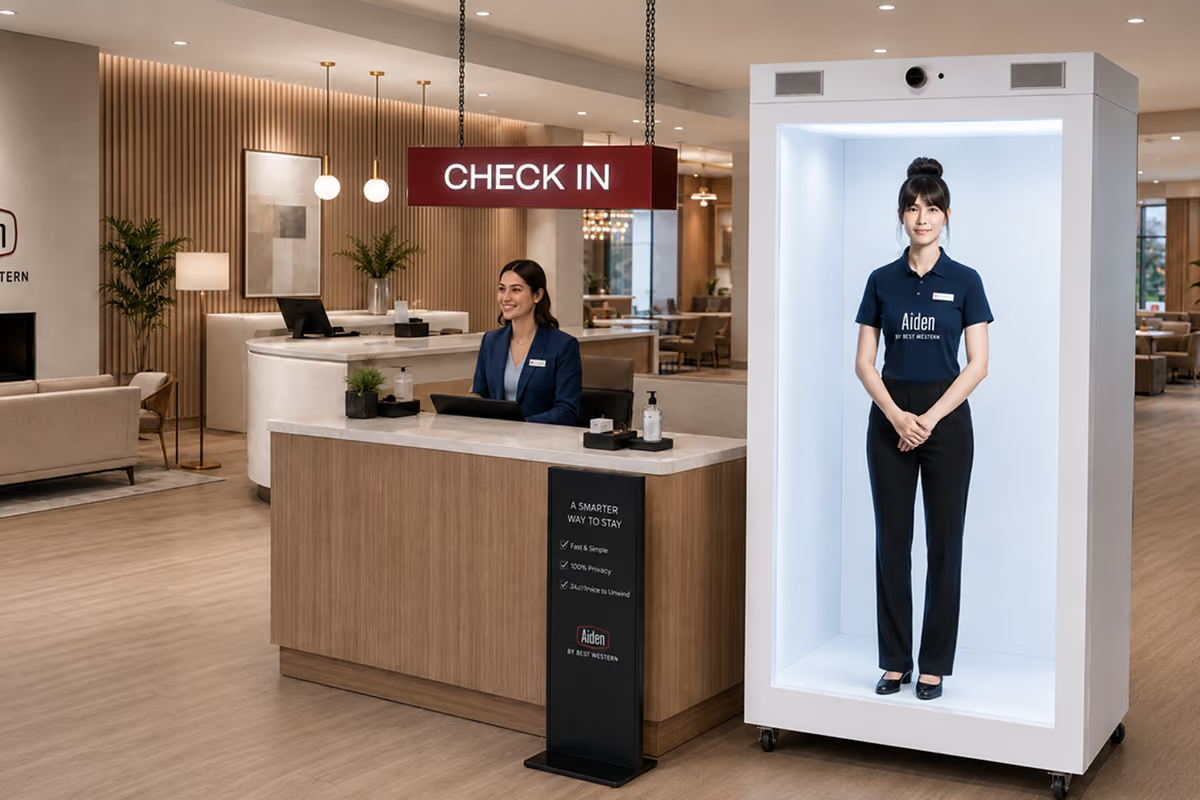
For front-office managers and operations directors, an AI hologram receptionist directly attacks the hardest problem in hotel operations: covering the desk, everywhere, all the time. Night shifts, sudden absences, and arrival peaks no longer dictate staffing headcount at every property. A HoloBox is mobile and effectively plug-and-play — positioned in the lobby, connected to power and internet, and ready to greet guests without a fragile build or specialist rigging. Because the AI avatar handles routine check-ins, check-outs, and key generation autonomously, and a single remote team in one location can cover live human escalations across several hotels, operators can centralise their most capable, multilingual staff and deploy that expertise to whichever property needs it — cutting coverage gaps and lowering the cost and risk of round-the-clock reception.
Guest-experience and brand teams gain a consistent, on-brand welcome that travels across an entire portfolio. Delivering the same premium arrival at every managed or franchised property is notoriously hard; standards drift location to location. A holographic front desk fixes the experience at the point of arrival: every guest meets the same polished, life-size greeter, and the brand's best people can maintain an authoritative presence at multiple sites at once through the live hologram link. For a forward-looking concept like Aiden — built around self-service, smart technology, and an easy-going, unpretentious feel — the hologram is also a natural earned-media magnet, generating coverage and organic social sharing simply because of how memorable and futuristic the arrival feels.
For revenue managers, the decisive benefit is engaged attention that converts. Guests increasingly ignore static lobby signage and printed promotions. A life-size, conversational hologram does the opposite — it stops foot traffic and invites interaction. Because the avatar is wired into the booking system and already conducting the check-in conversation, it can fold personalised offers directly into that moment: a room upgrade, a spa slot, a dinner reservation, surfaced naturally rather than pushed. The same interface that greets the guest becomes a contextual, high-intent upselling channel — turning the front desk from a cost centre into an active driver of ancillary revenue.
Hologram hotel check-in is not technological showmanship; for operators it is a measurable lever on labour cost, guest satisfaction, ancillary revenue, and brand reach. The headline figures below are indicative industry benchmark ranges for enterprise-grade holographic and AI-avatar front-desk deployments, not figures published by CIC Hospitality; the Aiden launch itself was structured as an early-mover pilot to gather guest and operator feedback and expand the feature set over time.
Key performance indicators for enterprise-grade hospitality holographic deployments include:
Centralising concierge coverage and letting an AI avatar handle routine arrivals can cut dedicated front-desk labour cost across a portfolio, with the sharpest savings on night shifts and off-peak hours.
Properties featuring interactive holographic check-in tend to score higher on arrival experience and perceived brand innovation than comparable properties relying on a traditional kiosk or desk.
Replacing static lobby promotions with personalised, in-conversation offers from a holographic concierge can lift conversion on room upgrades, dining, and spa add-ons.
A visually striking holographic front desk acts as an organic PR catalyst, generating far more trade and travel coverage — and more organic guest social impressions — than a conventional lobby refit.
The Aiden by Best Western deployment proves that hologram hotel check-in has matured from spectacle into working hospitality infrastructure. By pairing an always-on AI avatar with an on-demand live human hologram — and wiring both into the property management system — CIC Hospitality showed how a single, scalable front-desk model can deliver routine service automatically while keeping genuine human warmth one tap away.
As guest expectations for smart, contactless, tech-forward stays continue to rise, the operators who invest early in interactive holographic reception will hold a durable advantage. Turning a queue-and-paperwork chore into a memorable, conversational welcome does more than impress: it relieves pressure on front-desk teams, extends the reach of an operator's best people across an entire portfolio, and converts the arrival moment into measurable gains in efficiency, ancillary revenue, and brand equity. For Indian hotel groups weighing how to scale premium service without scaling headcount, it is a model worth studying now.