A permanent, always-on network of hologram advertising displays helped Simon Property Group stop shoppers across 30 malls, tell brand stories in 3D, and open a premium DOOH revenue line. Here's how it works — and what it returns.
E-commerce has rewritten what a mall is for, and physical retail property now has to offer something a phone can't. Static billboards, printed banners and flat digital screens no longer stop a digitally native audience — shoppers walk past them the way they scroll past banner ads. The job of a modern mall isn't displaying an advertisement on a wall; it's creating an immersive brand moment that earns attention and converts footfall into premium, sellable media.
Simon Property Group, the largest shopping mall operator in the United States with an interest in more than 250 retail properties, saw the shift early. With a portfolio weighted toward premium malls and outlet centres, it wanted a network-wide centrepiece that did far more than rotate video ads — a dynamic, interactive advertising platform that could deliver high-fidelity 3D brand experiences shoppers instantly engage with. The aim: blend physical retail and cutting-edge digital advertising, get people stopping and interacting, and build a new, measurable revenue line underneath it all.
So Simon Property Group made a deliberate, large-scale bet: a permanent, life-size hologram advertising network across 30 of its premier locations — a clear break from DOOH norms. Not a pop-up, a single-mall stunt or a launch gimmick, but an always-on installation built as core media infrastructure from day one. The goal was direct: drive shopper engagement at scale, give brands a 3D medium nobody else could offer, and open a high-margin advertising revenue stream. In doing so, it set a new benchmark and proved holograms can be a reliable engine for DOOH commerce, not just a novelty.
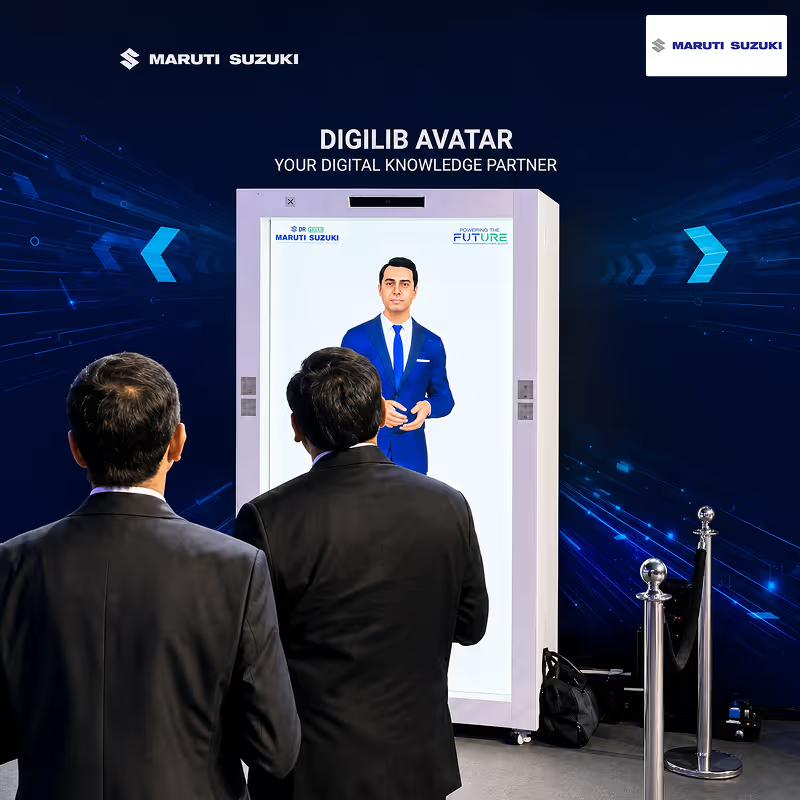
A scalable hologram advertising network needs hardware, cloud software and high-fidelity 3D content working together. At the core of the Simon install is a fleet of life-size volumetric units — 86-inch 4K HoloBox-class enclosures built for high-traffic public spaces. Each renders photorealistic 3D images that appear to float inside the glass. Crucially, they run at high brightness, so the holograms stay crisp against harsh overhead lighting and skylight glare — turning each unit into a visual magnet from across the concourse rather than a screen people drift past.
Content is what makes the hardware work. Simon's media division builds detailed 4K 3D models with brand advertisers — luxury fashion, automotive, consumer electronics, film characters — not static loops but fully rigged, animated assets loaded into a cloud-based content management system (CMS). The CMS is the brain of the whole 30-mall network: the central operations team pushes updates, swaps featured ads by time of day or mall demographic, and schedules animations across all 30 sites simultaneously. A shopper might see a sports car rotate to show its lines, then an "exploded view" reveal the drivetrain in lifelike 3D. Each unit draws under 40W and accepts content via media server, USB or TF card, so refreshes are fast and field maintenance stays light.
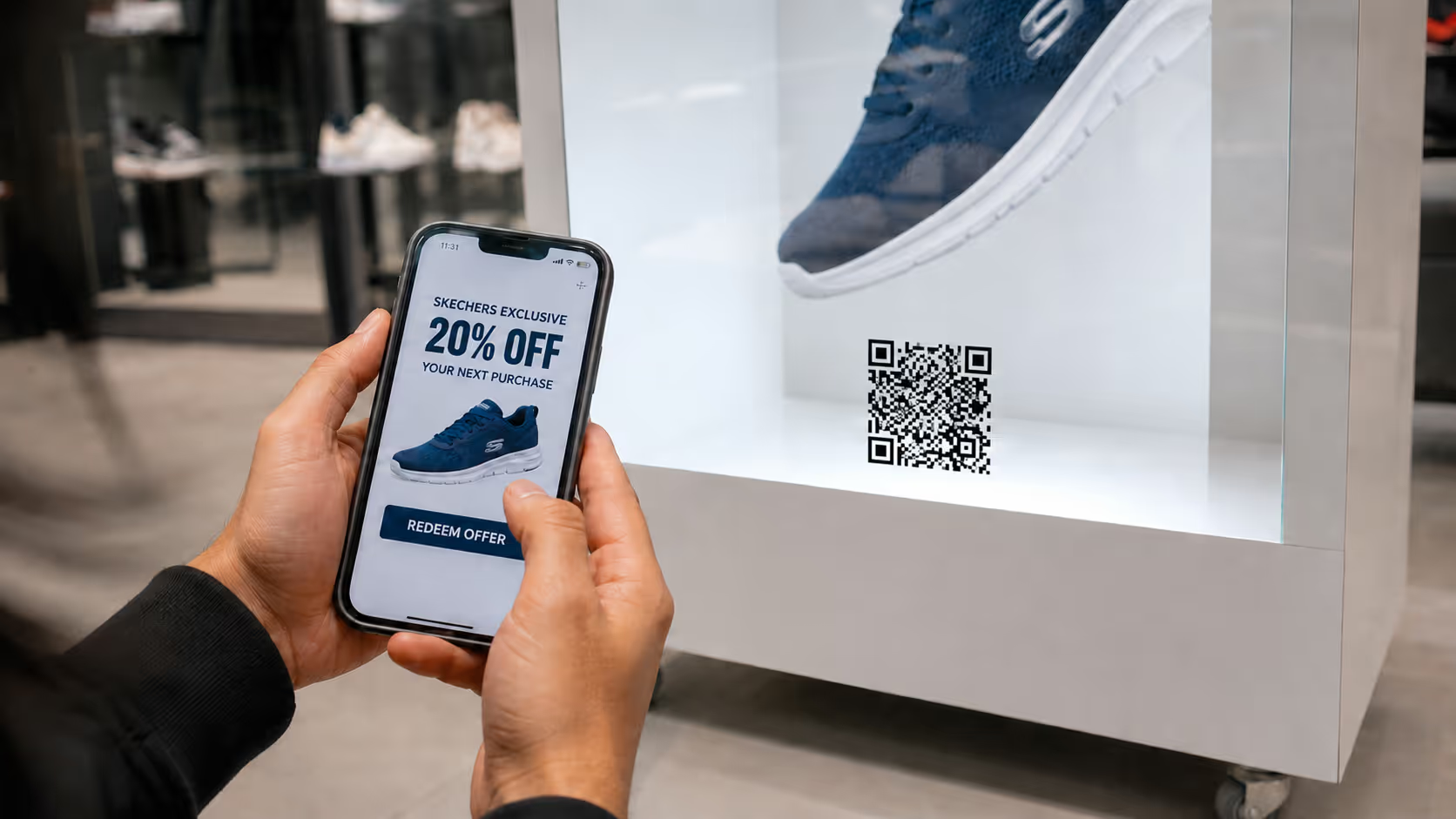
What turns it from a spectacle into a premium advertising tool is interactivity. The displays pair a 22-inch interactive touch overlay with real-time QR-code generation. Shoppers aren't passive — they select product variants, cycle colours and pull detailed specs. When something lands, they scan a campaign-specific QR code on the unit's base to send the offer, coupon or product page straight to their phone's browser. That handoff bridges holographic discovery and frictionless digital conversion — and captures intent at the exact point of attention.
An ultra-bright volumetric display projects a floating 3D product that reads clearly across the concourse — a visual magnet for passing foot traffic that cuts straight through banner blindness.
A 360° rotation and an educational "exploded view" reveal the product's features and engineering in lifelike 3D — a brand moment, not a brand message.
The 22-inch touch interface lets shoppers switch variants, cycle colours, and check specs and pricing from a digital catalogue — turning a viewer into a participant.
A campaign-specific QR code hands the offer to the shopper's phone — claim now, or save for later — bridging immersive discovery to measurable digital conversion.
For the media sales team, this is a paradigm shift. Selling digital mall signage once meant competing on CPMs against hundreds of identical flat screens — a race to the bottom. Now the team offers brands an exclusive, high-impact 3D medium that all but guarantees attention, letting them command premium rates and lift revenue yield per square foot of mall space. It also unlocks dynamic, hyper-targeted buys managed centrally — a luxury house can own the holographic network during high-income weekend hours, while a studio buys out the same network for a Friday-night premiere.
Operations and facilities gain from the network's centralised, cloud-managed nature. Managing physical ad installs across 30 properties is a logistical drain; the holographic network behaves instead like reliable digital infrastructure. It removes printed banners, install crews and the downtime between campaigns. The permanent units are built for continuous operation and need minimal daily upkeep, while the CMS monitors every unit remotely — flagging hardware or connectivity issues automatically before they become site problems.
Marketing gains insights static billboards never could. Each interactive unit is a data hub: it tracks which 3D ads draw the most views, how long shoppers engage with specific animations, and the conversion driven through QR scans. That lets marketers optimise content continuously, prove ROI on holographic spend to brand clients, and measure exact return — well beyond the guesswork and generic footfall estimates of legacy DOOH measurement.
A permanent hologram advertising network isn't just brand building — it delivers measurable financial results that justify the capital outlay. Where printed displays and flat screens suffer from banner blindness, holographic presence cuts through, lifting both initial attention and sustained dwell time. Operators report verifiable gains in media sales revenue that translate directly to property profitability.
Key Performance Indicators (KPIs) for enterprise-grade mall holographic networks include:
Positioned in high-traffic concourses, holographic units command premium CPM rates — raising DOOH revenue yield per unit versus standard flat-panel digital kiosks.
Shoppers spend around 45% longer with volumetric 3D advertisements than with static or 2D video signage — more time for brands to land the message.
Dynamic QR codes and interactive product exploration bridge physical to digital, lifting featured-brand conversions — coupon downloads, app installs, lead capture.
Cloud-managed 3D content removes the recurring cost of banner printing, nationwide shipping and overnight install labour for seasonal campaigns across all 30 properties.
The Simon Property Group deployment across 30 premier locations proves the technology has matured. It's no longer a fragile novelty for single-location PR stunts — it's permanent infrastructure for the future of Digital Out-Of-Home. A hologram advertising network bridges the physical and digital: the tactile presence of a billboard with the creativity, dynamic scheduling and data depth of modern digital media.
As brand expectations for immersive, tech-forward formats rise, operators that invest early in interactive volumetric networks gain a durable edge. By turning passive mall walkers into active brand participants, forward-thinking property managers drive engagement, extend dwell time and create memorable interactions — which translate into premium media sales, higher property valuations and stronger tenant loyalty. The future of mall advertising is three-dimensional, and the groups embracing it now will define the DOOH landscape of tomorrow.