UFC 306 proved that holographic-grade spectacle drives gate, merchandise and sponsorship at the very top of the market. Here's how compact, low-power HoloFan displays bring that same floating-3D wow factor to Indian stadiums, lounges and fan zones — and what it returns.
For decades, the live sports proposition was simple: the match was the product. Today that is no longer enough. The modern fan arrives already saturated with screens and expects the venue itself to deliver something their phone cannot — an experience that begins on the concourse and lingers long after the final whistle. Franchise owners and stadium operators now face a sharper commercial question: how do you turn footfall into dwell time, dwell time into spend, and a single match-day into shareable moments that justify a premium ticket? The answer the industry has been reaching for is immersive technology that brings fans closer to the spectacle than a flat screen ever could — and holographic fan engagement in sports has become the clearest expression of that shift.
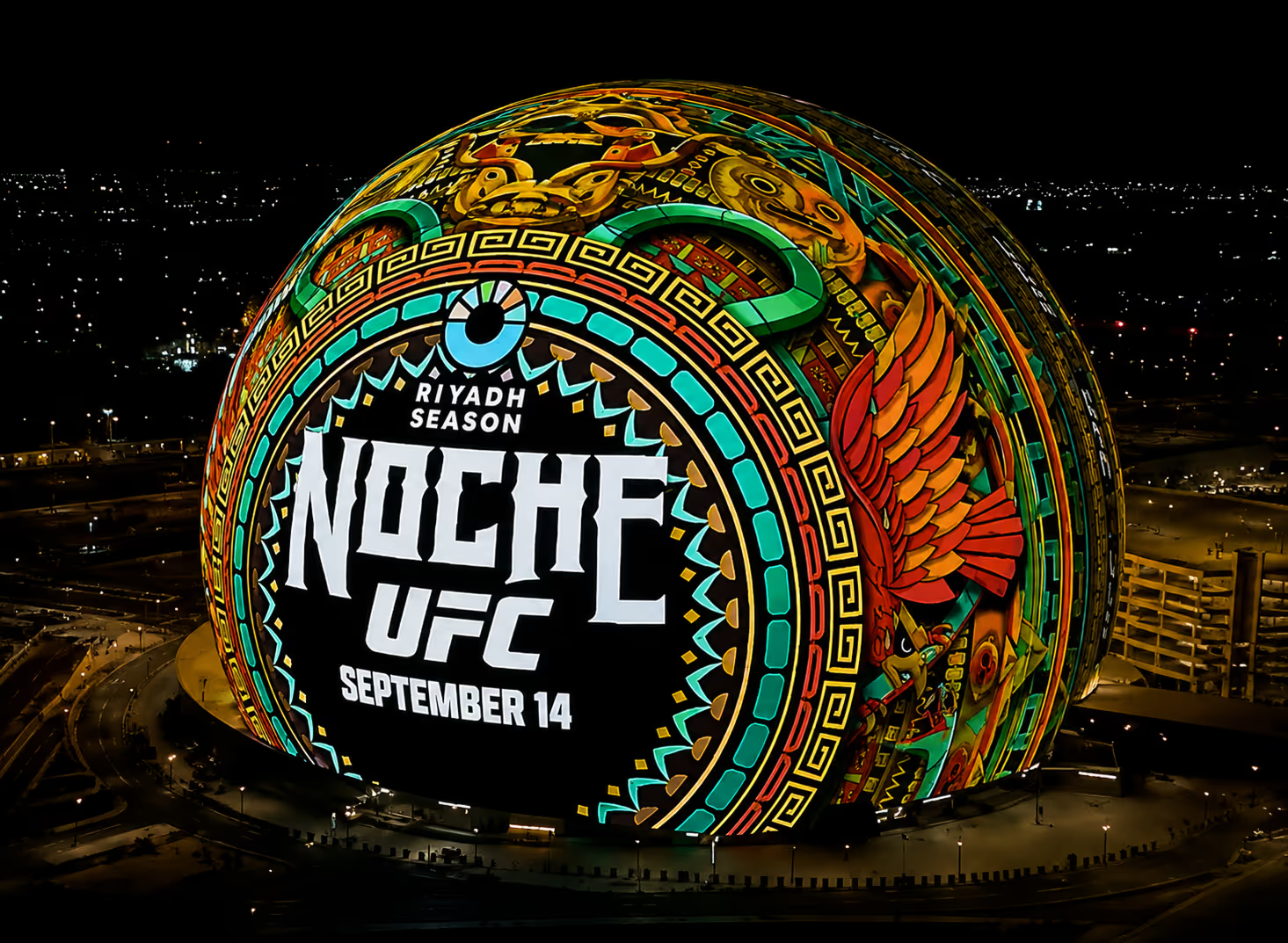
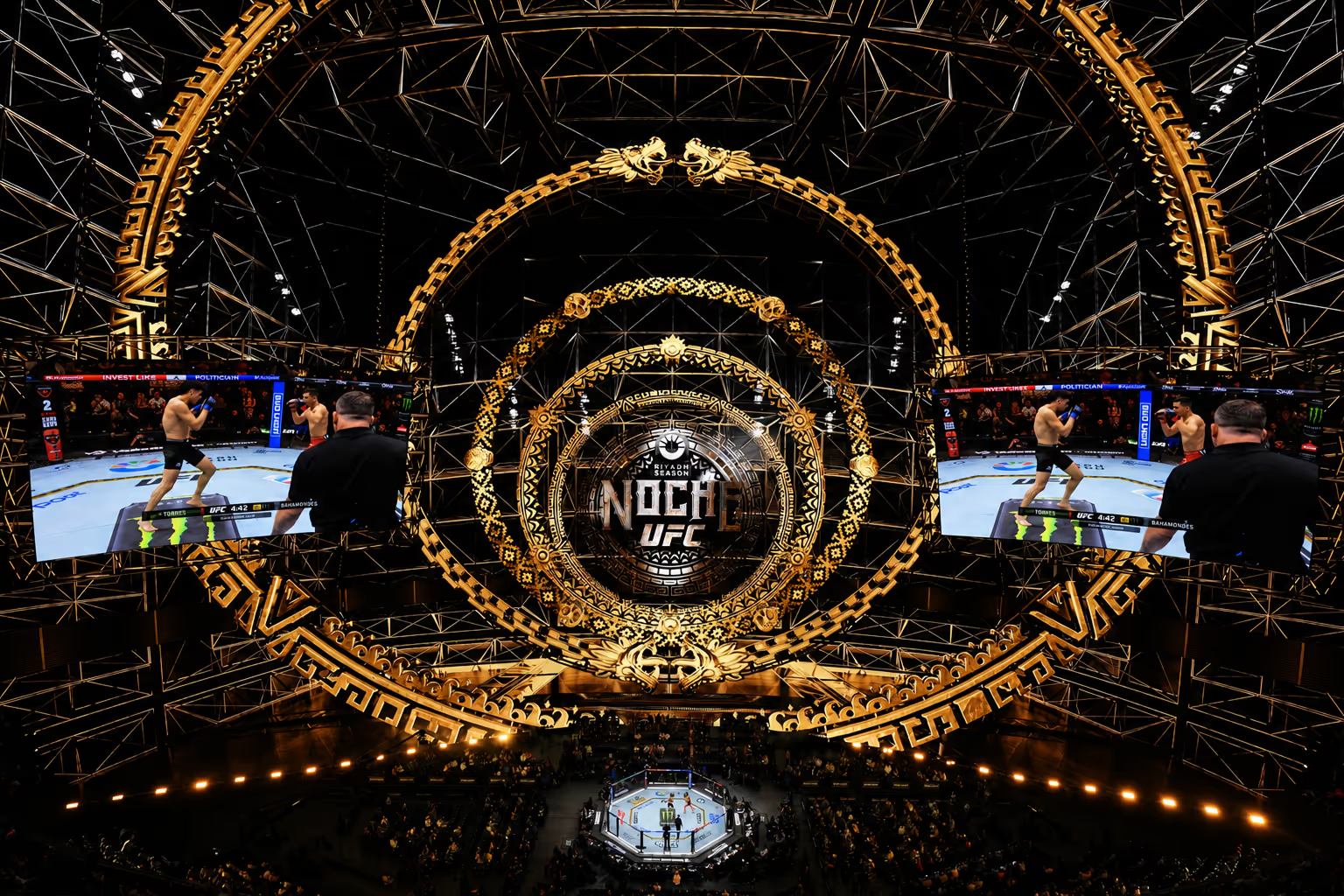
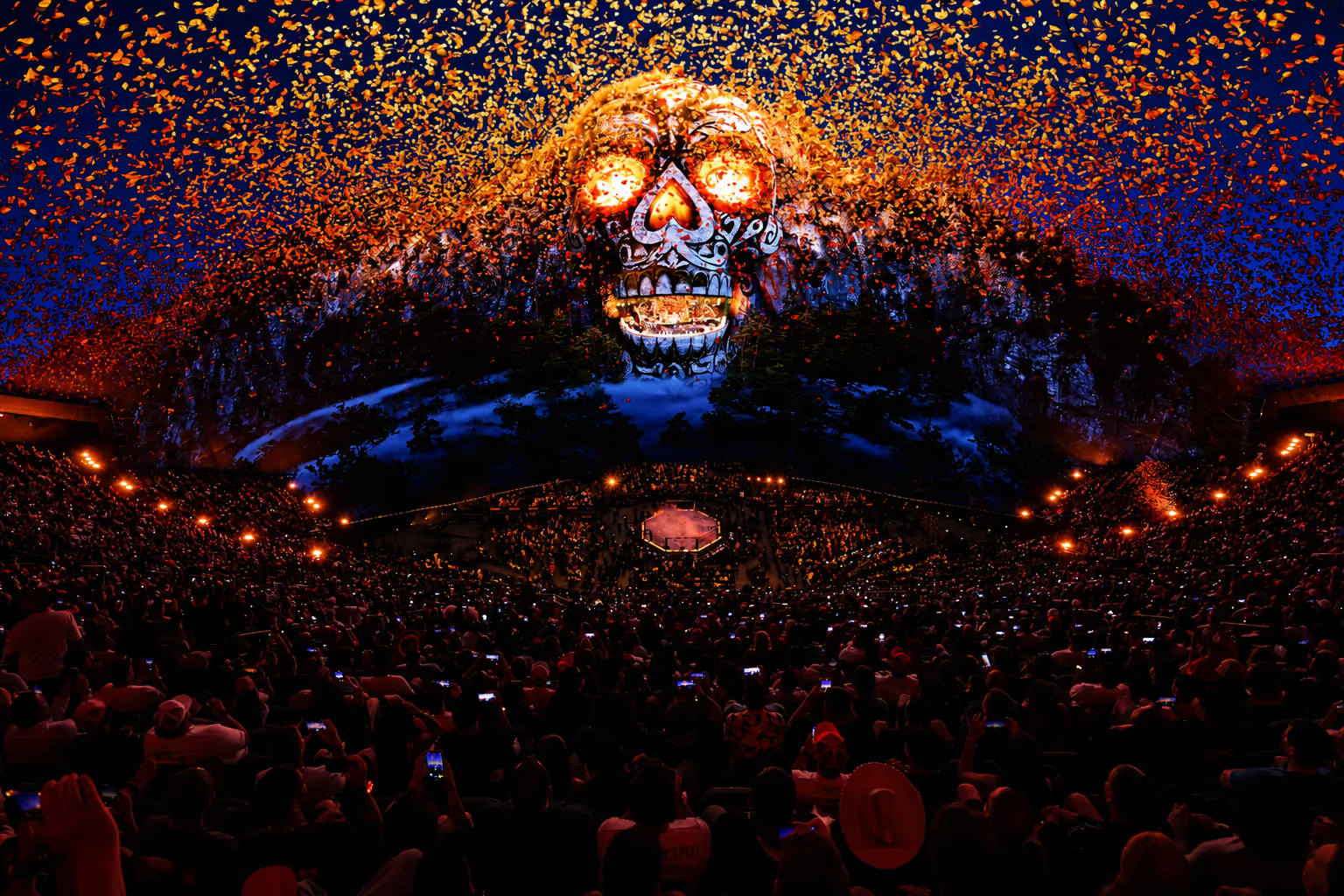
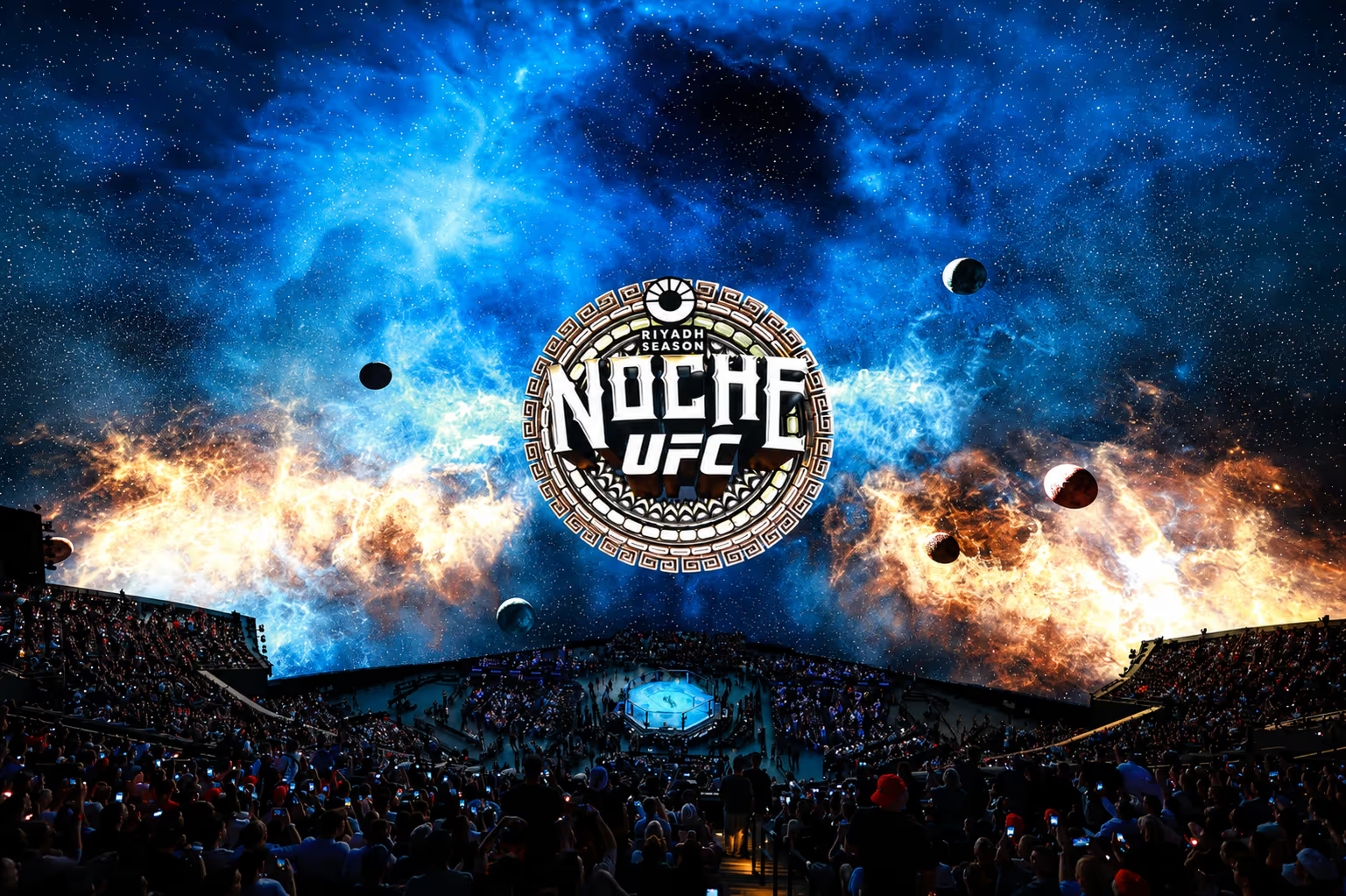
UFC 306 made that ambition impossible to ignore. Held on 14 September 2024 at the Sphere in Las Vegas as Riyadh Season Noche UFC, the event became the highest-grossing in UFC history, with a $22 million gate and a sold-out crowd of 16,024. The fights were staged inside immersive animated "worlds," and six 90-second films celebrating Mexican heritage took over the Sphere's 16K interior media plane — the world's highest-resolution LED display. It also set records for merchandise, sponsorship, and VIP package sales, with 89% of ticket buyers travelling from outside Nevada.
The lesson for the industry was not "build a billion-dollar dome." It was that holographic-grade spectacle drives measurable commercial outcomes — gate, merchandise, sponsorship, and tourism — when fans feel they are inside the story rather than watching it. The opportunity now is to bring that same floating-3D wow factor down to the scale of a regular stadium, a club lounge, or a brand activation — without the Sphere's budget or footprint. This is exactly where holographic fan displays come in. Instead of a 160,000 sq. ft. dome, a compact rotating-LED HoloFan suspends a sharp 3D visual in open air, with no screen, no frame, and no glasses required. The journey from a one-off mega-event to plug-and-play units that a marketing team can wheel into a concourse is what has turned holographic fan engagement in sports from a spectacle reserved for the few into a practical, high-ROI tool for franchises and sponsors across India.
HoloFan technology is built on persistence of vision (POV). Slim LED-embedded blades spin at high speed; once at full rotation, the blades themselves visually disappear, leaving only the illuminated content suspended in mid-air. The result is a crisp, glowing 3D image that appears to float with no visible screen, bezel, or projection surface — and crucially, it is fully visible to the naked eye. A single HoloFan unit typically spans 65–100 cm, renders at 1024×1024 resolution with a 170° viewing angle, draws only around 96W, and is controlled over WiFi through a simple app. That compact, low-power footprint is what lets a holographic display sit on a concourse counter, a lounge plinth, or a retail shelf where a stage rig never could.
For larger-than-life storytelling, multiple HoloFans are stitched into a synchronised array — a holographic wall. In a 2-fan, 4-fan, 6-fan, or 8-fan-plus configuration, each unit renders a portion of a single visual, combining into one seamless, life-sized holographic image powerful enough to anchor a stadium entrance or a hero zone at a launch. The display package includes the structural frame, alignment, content creation, installation, and training, so the venue receives a finished hero asset rather than loose hardware. The same approach scales down to entry-level activations and up to dual-fan integrated systems with on-site technical support.
What turns this from a visual novelty into a commercial tool is the content and the operating model. The most effective holographic loops run 30–90 seconds and lean on three proven formats: product and player spins (360° rotation with zoom on detail), exploded views (kit, gear, or a vehicle breaking apart to reveal what's inside), and transformations (a jersey reveal, a before-and-after, a morph). Content is updated remotely through the app, so a sponsor's creative can change between fixtures without re-rigging anything. Because each unit only needs standard power and a network connection, a marketing team can deploy a holographic fan experience in hours, not days — and relocate it across concourses, lounges, partner stores, and roadshows as the season demands.
A 360° product or player rotation with zoom on detail — the floating-3D format that stops foot traffic and reads clearly from across the concourse.
An exploded view breaks kit, gear or a vehicle apart in lifelike 3D to reveal what's inside — a brand moment, not a brand message.
A jersey reveal, before-and-after or morph effect lands the hook — high-contrast loops on dark backgrounds render most sharply.
Standard power and WiFi mean a unit is live in hours, with creative updated remotely between fixtures and relocated zone to zone as the season demands.
For operations teams, the appeal is low complexity and high mobility. There is no concourse closure, no truss build, and no multi-day calibration. A HoloFan plugs into standard power and WiFi and is live within hours, which sharply reduces setup cost, specialised labour, and execution risk. Just as importantly, the small footprint unlocks venues that older holographic rigs could never enter — club lounges, members' bars, ticketing foyers, and merchandise stores — letting operators place premium "wow" moments exactly where fans gather and spend.
Securing star-athlete time for on-ground activations is notoriously hard, which caps how many high-value sponsor deliverables a franchise can execute on match-day. A floating-3D holographic display gives sponsors an unmissable, futuristic centrepiece that runs without needing the athlete physically present, delivers perfectly consistent branded creative across every zone, and refreshes remotely between fixtures. The novelty of the format reliably earns social shares and press coverage, multiplying the value of each sponsorship rupee well beyond the footprint of the unit itself.
On a crowded concourse, fans tune out static mannequins and ordinary digital signage. A glowing, life-sized hologram of a star player in the new jersey stops foot traffic and creates an instantly shareable moment that fans broadcast to their own networks — organic reach the team does not pay for. Pairing the display with a QR code or a direct purchase prompt turns it from a passive attraction into an active point of sale, lifting both attention and conversion at the merchandise counter.
Holographic fan engagement is not showmanship for its own sake — deployed well, it moves the metrics franchises and sponsors actually report on. The figures below are industry benchmark ranges for floating-3D holographic activations and should be presented as illustrative, not client-confirmed.
Interactive holographic displays in concourses and fan zones can lift average dwell time in monetisable areas by 3x–5x, and longer dwell correlates directly with higher F&B and merchandise spend.
Activations built around floating-3D holograms typically score 40–50% higher on engagement and brand recall than standard 2D video or static signage.
Holographic fan zones tend to generate 3x–5x more organic social impressions and press pick-up than conventional match-day experiences
Plug-and-play HoloFan units cut setup time from days to hours, reducing on-site labour and execution risk versus legacy stage-illusion rigs.
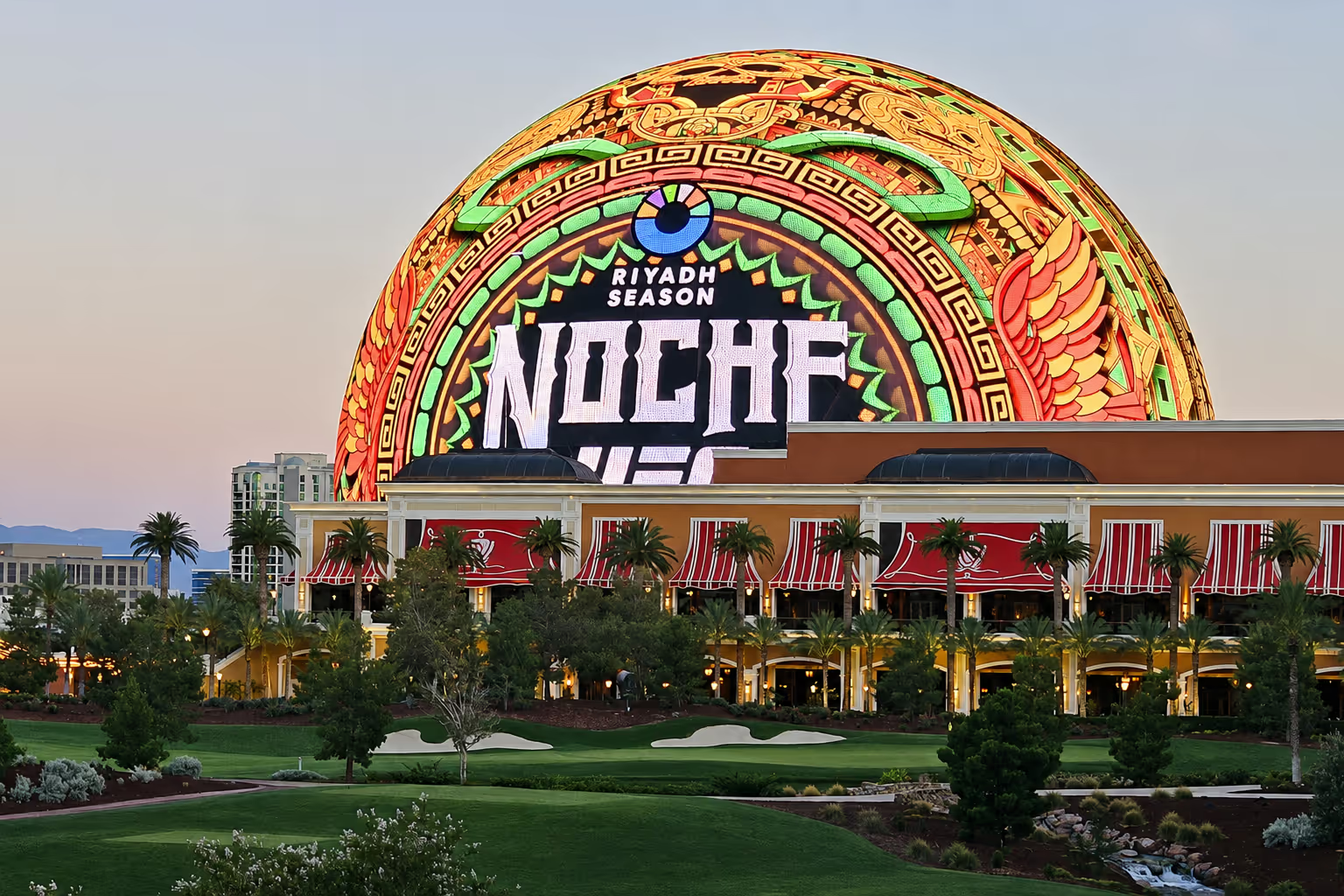
UFC 306 proved, at the very top of the market, that holographic-grade spectacle translates into hard commercial outcomes — record gate, merchandise, sponsorship, and travel demand — when fans feel they are inside the story. The breakthrough for everyone else is that you no longer need a Sphere to capture that effect. Compact, low-power HoloFan displays deliver genuine floating-3D engagement at the scale of a concourse, a lounge, or a brand activation, and they can be deployed and relocated in hours rather than days.
As fan expectations for tech-forward venues keep rising, the franchises and sponsors that invest early in holographic fan engagement will own the most shareable moments in the building — and convert them into dwell time, spend, and loyalty. Holographic displays turn passive spectators into active participants, and in a crowded entertainment market, that is the difference between a match fans attend and an experience they talk about.